Alternative Fuel Vehicles Increase Finance Market Share in Q4 2021
While there are still uncertainties within the automotive space due to ongoing challenges like the microchip and inventory shortages, the data shows that the industry is continuing to move forward and evolve.
by Melinda Zabritski
April 29, 2022
While there are still uncertainties within the automotive space due to ongoing challenges like the microchip and inventory shortages, the data shows that the industry is continuing to move forward and evolve.
IMAGE: Getty Images
4 min to read
Two of the more prevalent automotive industry topics include the ongoing inventory shortage and electric vehicles—and we’re seeing the impacts of both on the automotive finance market. Inventory shortages across new and used vehicles have contributed to consumers taking out larger loans, while electric vehicles (EVs) continue to grow in popularity.
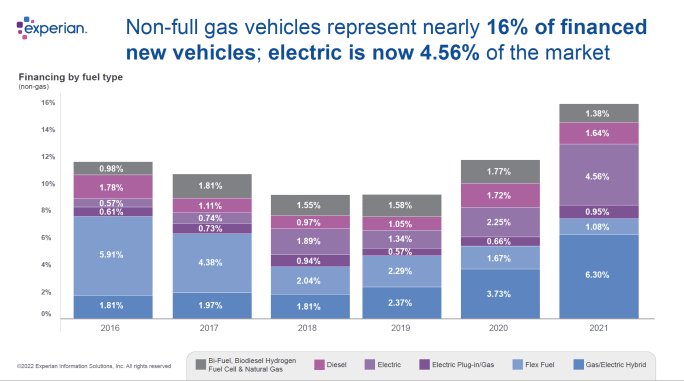
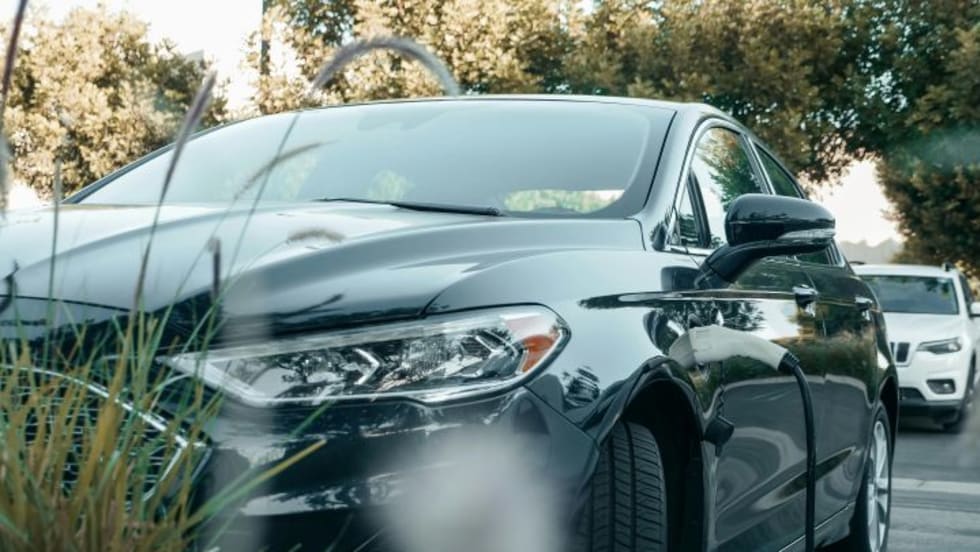
Overall, alternative fuel vehicles (including flex-fuel, diesel, gas/electric hybrids, and EVs, among others) comprised nearly 16% of new vehicle financing in Q4 2021. Gas/electric hybrids and EVs made up the lion’s share at 6.3% and 4.56%, respectively. While the percentages are small, this represents significant year-over-year growth, particularly for EVs, which doubled market share from 2.25% in Q4 2020.
Ad Loading...
One of the factors driving EV popularity is the increase in model availability. At the onset, EVs tended to have higher price points; however, more affordable options have come to market over the past few years. While Tesla still dominates the space, accounting for three of the top five financed EVs—the Model 3 (36.62%), Model Y (34.18%), and Model S (5.3%)—it’s rounded out by the Ford Mustang Mach-E (6.02%) and Volkswagen ID.4 (3.4%). With newer models expected to release in the coming years, alternative fuel vehicles will continue to make up a more significant portion of the finance market.
Average Loan Amounts and Monthly Payments Increase
When the chip shortage first started, there were a number of questions, such as how long it would last and what the long-term impacts would be. While we still don’t have a definitive answer to the length of the microchip shortage, one of the impacts is quite clear: consumers are paying more for vehicles—particularly in the used vehicle segment.
While this isn’t exactly surprising, given the limited supply, what makes it so notable is just how fast the average loan amounts jumped year-over-year. In Q4 2021, the average used vehicle loan amount jumped 20% from the previous year, reaching $27,291 in Q4 2021. For context, the year-over-year increase prior to 2021 was 8.3% in 2020 and 3.4% in 2019. So, while the amount has been steadily increasing, the growth was significantly higher in 2021.
Similar trends occurred in the new vehicle segment, though they were not as dramatic. The average new vehicle loan amount increased 12% year-over-year, reaching $39,721 in Q4 2021, which was still double the percentage increase we saw in 2020.
Ad Loading...
In addition to the increase in average loan amounts, average monthly payments and loan terms saw jumps. The average monthly payment for new vehicles was $644 in Q4 2021, up from $579 in Q4 2021, while the average monthly payment for used vehicles saw a similar increase, reaching $488 in Q4 2021 up from $417 in the same time frame.
With both higher loan amounts and monthly payments, an ongoing trend is consumers extending their loan terms. This was more obvious in used vehicle financing in Q4 2021 than new vehicle financing. The average term for a used vehicle loan jumped from 65.56 months to 67.36 months, year-over-year, while the average loan term for new vehicle financing saw a minimal uptick from 69.63 months in Q4 2020 to 69.66 months in Q4 2021.
Banks and Credit Unions Grow Market Share
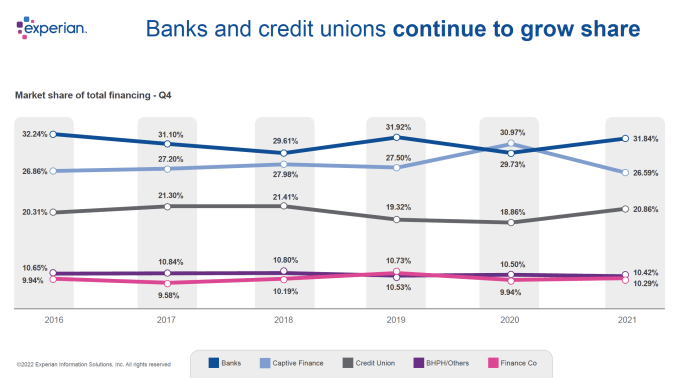
Looking at the distribution of vehicle financing, banks and credit unions saw increases as the market continued to level out and return to pre-pandemic trends. Banks increased overall market share from 29.73% in Q4 2020 to 31.84% in Q4 2021, while credit unions grew from 18.86% to 20.86% in the same time frame. Captives decreased from 30.97% in Q4 2020 to 26.59% in Q4 2021, while finance companies (10.29%) and Buy Here, Pay Here/other lenders (10.42%) saw minimal shifts year-over-year.
The growth stemmed from both new and used vehicle financing for banks and credit unions. Banks grew from 26.45% to 29.08% year-over-year in new financing, while credit unions reached 13.75% in Q1 2021, up from 11.24% in Q4 2020. While banks still took the top spot in funding used vehicles at 33.8% in Q4 2021, credit unions made up more of the market at 25.93%. Typically, credit unions play a stronger role in used vehicle financing, so this is in line with usual trends.
Ad Loading...
While there are still uncertainties within the automotive space due to ongoing challenges like the microchip and inventory shortages, the data shows that the industry is continuing to move forward and evolve—especially as alternative fuel vehicles continue to grow in popularity and availability. By paying attention to these trends and others, lenders and dealers can make more strategic decisions as they navigate the uncertain market.
Melinda Zabritski serves as Experian’s senior director of automotive financial solutions.
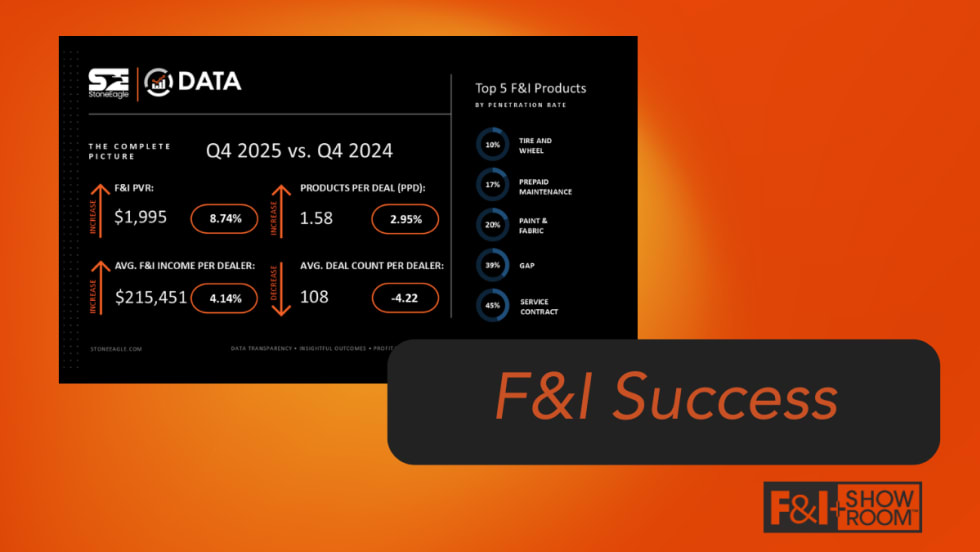
Deal volume ebbed and flowed throughout 2025, but product performance remained steady, according to automotive technology and data intelligence solutions provider StoneEagle.
Americans’ view of present business conditions, the labor market and family finances, though, are still in the dumps, and if they plan to buy cars, many target used units.
Auto loan originations rose over 6% year-over-year in the third quarter of 2025, but TransUnion predicts a slight decline in auto loan growth this year, making it an outlier in the company's overall lending forecast.
Edmunds’ editorial team tested 300-plus vehicles to help determine the Top Rated Awards for 2026, and one brand stood out with multiple rankings, including Best of the Best.
February forecast has new-vehicle deliveries still off from last year at this time amid high prices and vanished EV incentives. But J.D. Power sees business picking up from here as automakers target growth.
Study finds that adopters are true believers and that their satisfaction with the vehicles is growing, including for public charger experience, despite pullback of federal incentives.
The sector generates over $64 billion in annual economic impact in South Carolina, making it the largest and fastest-growing manufacturing subsector in the state.