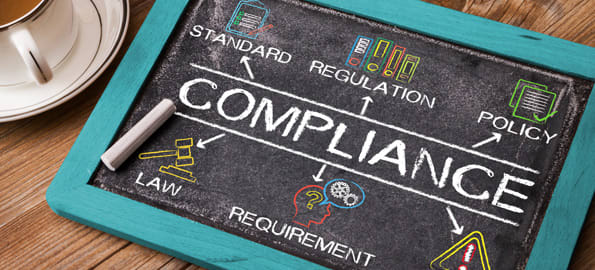
Unlike love, compliance at a dealership is not a many-splendored thing, but it is certainly many-faceted. Discrete facets of compliance include sexual harassment, advertising, human resources, sales, F&I, environmental, health and safety (EH&S), data security, taxation, and the list goes on.
Sometimes it is helpful to organize all of these issues into what I call “zones of compliance.” Zones of compliance chop the massive tangle of issues into manageable bites. And viewing the overall issue of dealership compliance into specific zones of compliance helps identify another important issue: Who is responsible for each zone?
Ultimate responsibility, of course, will always attach to ownership. But functional, day-to-day responsibility may be delegated to an appropriate person lower on the food chain.
Your Zone, My Zone
Some compliance zones are self-evident. Deploying policy documents and ensuring sexual harassment and other core training is accomplished falls naturally under the job description of human resources. Because of the heightened risk of industrial accidents and the presence of chemicals in the shop, EH&S responsibility usually runs to the service manager.
That’s within a dealership. Are there zones of compliance that impact a dealership’s vendors? I believe so. OEMs, for example, have at least a moral obligation to provide dealerships with accurate product information so the dealership’s sales personnel can accurately represent the vehicle’s features to potential customers.
Product providers have a similar obligation. To illustrate, indulge a lawyer’s war story. (The details have been changed to protect, well, me.) Unethical Dealer packs payments to include a vehicle service contract on almost every car financed at his store. Unethical Dealer F&I personnel go the extra mile and overstate the scope of what the “included” VSC covers, liberally using the term “bumper-to-bumper.” (There’s no such thing, by the way.)
Enough customers complain about uncovered claims that a class action lawsuit is filed. Remarkably, the plaintiffs’ attorneys are so unfamiliar with automotive finance that they ignore the obvious payment packing issues and focus on the overpromise part — claims for failures that the F&I personnel said would be covered but were not, such as gaskets, wear items, wiper blades and brake pads.
The kicker? Instead of happily settling for the cost of some brake pads and wipers, Unethical Dealer threatened to bring the F&I product provider into the lawsuit for failing to train Unethical Dealer’s F&I personnel on the limitations of coverage in the VSCs Unethical Dealer sold.
All of this was baloney, of course, and Unethical Dealer backed down when the provider’s counsel explained how easy it would be to prove Unethical Dealer packed payments if the parties were suddenly to find themselves on opposite ends of the lawsuit. But it illustrates an important point: Product providers have a dog in the hunt when it comes to how their products are represented and sold in the F&I office. It is their zone of compliance.
The Product Provider’s Role
So how does a product provider fulfill its duties in the zone of compliance it touches? In at least three ways:
Provide accurate product information. This is obvious, and is something all providers should be doing already anyway. But most providers and their agents see this as a sales and marketing effort, not a compliance duty. In fact, it is both.
Provide effective training on both product knowledge and legally compliant presentation/disclosure techniques. Again, one would think this is obvious and universally followed. Not so. Even as I was drafting this article, I got a phone call from a channel partner employee who informed me one of its dealerships, as a regular sales tactic, presented an initial payment that included a VSC and GAP. Honestly! Unvarnished payment packing as a baseline practice — in 2016! The point for the product provider is to provide verifiable training content so that, when the class action lawsuit comes, Unethical Dealer can’t say “My provider made me do it.”
Prove the F&I personnel who sell your products actually took and understood your training. There are multiple ways to de-fur this feline. You or your agents can conduct onsite training at the dealership, or at your home office, or it can be done online. Be sure there is a test at the end so you can prove the students paid attention and learned the material. That way, if a different (and illegal) practice is used, you can prove it didn’t originate with you. Best practice here would be to require successful completion of the training before an F&I manager was allowed to represent your products in front of a live customer. Annual refresher training is also important.
Encourage the F&I personnel who sell your products to learn the law that covers their activities. Product providers and administrators aren’t law firms, and they generally avoid giving anything that resembles legal advice in their own name. But everybody wins when F&I personnel know the law that impacts their jobs. Providers and administrators are in a position to encourage that training and make opportunities for it available. Multiple certifications are available to demonstrate this level of training, but that’s a topic for the next issue.
Within your dealership clients, you have a zone of compliance. Be sure to keep your clients safe in that zone.