
The safety organization Kids and Car Safety finds that on average 38 children die each year in a hot-car tragedy.
Now regulators seek to prevent hot-car incidents with modern technology designed to protect vehicle occupants.

 MENU
MENU SEARCH
NHTSA has announced occupant protection safety standards for vehicles with automated driving systems, covering everything from seatbelt reminders to advanced airbags.
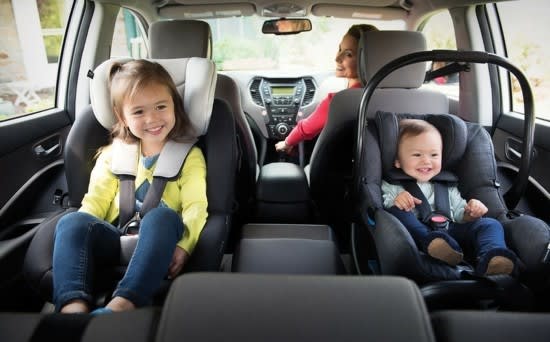
Creative Commons
The safety organization Kids and Car Safety finds that on average 38 children die each year in a hot-car tragedy.
Now regulators seek to prevent hot-car incidents with modern technology designed to protect vehicle occupants.
This is just one example of how in-cabin monitoring, a core focus of automotive safety bodies and regulators, may be used.
Recent changes to Euro NCAP standards concern in-car features, while NHTSA recently announced occupant protection safety standards for vehicles with automated driving systems, covering everything from seatbelt reminders to advanced airbags.
This shift toward safety presents new development and commercial challenges to OEMs and suppliers. Auto manufacturers must achieve compliance for a range of in-cabin applications without increasing complexity and cost. They also must future proof systems to meet the demands of emerging and ever-
Currently automakers add single-function sensors to meet new in-cabin regulations. But there’s a need for a smarter, streamlined strategy to better control vehicle costs. Automakers are seeking a more scalable platform model to meet future requirements.
A key focus is on Child Presence Detection (CPD) regulation. Euro NCAP will award points for CPD in new passenger vehicles design from 2023. The U.S. passed the Hot Cars Act, creating the impetus for a new NHTSA CPD mandate.
Automakers are looking at available technologies to meet CDP regulations. Solutions typically include weight sensors, simple radars, smart keys or door sequencing, all of which are susceptible to false alarms. Vehicles with standard CPD technology will not achieve a top Euro NCAP rating for CPD. Only solutions enabling detection and occupant classification can earn the full four points.
While CPD is of rising concern, legislators are also examining Seat Belt Reminders (SBR). Europe and Japan already require rear bench SBR. The U.S. Department of Transportation’s FMVSS 208 also hopes to mandate rear bench CBR.
Standard solutions for rear bench SBR depend on false-alarm-prone multiple weight sensors that also increase vehicle costs.
Smart airbags are also targeted with new safety regulations. The U.S. recently amended FMVSS 208 to demand advanced Airbag Suppression and low-risk deployment in the presence of a Child Restraint System (CRS).
This measure would ensure an airbag deploys for an adult but never for a child aged up to 18 months. However it poses a significant technology challenge.
The accuracy of weight-based occupancy sensors can be affected when a person isn’t seated correctly in the vehicle, potentially leading to failed airbag deployment and serious injury.
What’s more, a sophisticated infant car seat can weigh up to 20 pounds. When you add in the weight of a year old baby, the combined weight can be over 40 pounds, equal to that of a 6-year-old child. A single weight-based sensor would not be able to differentiate between a baby and an older child. Thus the airbag could go off, failing to ensure airbag suppression as required by FMVSS 208. In 2018, Euro NCAP introduced a standard assessment for automatic passenger airbag disabling systems.
Additional weight-based sensors can enable baseline compliance with these new regulations. But adding more single-function sensors to vehicles increases complexity and expense.
Single-sensor solutions cost an estimated $60 per car.
Automakers also may turn to high-resolution, single-chip 4D imaging radar technology that negates the need for additional weight-based sensors and allows them to replace legacy in-cabin systems.
This technology can provide exceptionally high-resolution data to detect people and objects and classify adults and children with pinpoint accuracy.
A multifunctional 4D imaging radar platform provides a rich, multi-dimensional point cloud image that simultaneously addresses global in-cabin requirements applications for CPD, rear bench SBR and smart airbags. The platform also supports scalability to add features such as Intruder Alerts, Gesture Control and Occupant Position Monitoring.
Using this technology would allow automakers to reduce sensor count and save money while achieving the highest possible safety ratings.

A handful of states see franchise growth through June, while EV sales per store boost overall business in U.S.
Read More →
Kerrigan metrics show there’s plenty of demand, though many sellers are waiting to pull the trigger.
Read More →
Company is providing a fully integrated F&I administration model to Nissan Extended Services North America’s dealer network.
Read More →
Despite incentive spending not keeping pace with deliveries volume, consumers make their purchases ahead of tariffs impact.
Read More →
Hybrid solution combines benefits of reinsurance and dealer-owned warranty companies.
Read More →
Kerrigan Advisors poll shows percentage of retailers expecting lower profits, valuations is on the rise.
Read More →
Says VW unit’s plans to sell directly to consumers violate state law.
Read More →
Take the time to answer these and lay the groundwork for a successful year-end.
Read More →
Consider taking the change of the seasons as a cue to evaluate some key operational aspects of the dealership.
Read More →
The strategic imperative for auto dealers is to prioritize F&I product sales and wealth-building in challenging times.
Read More →