Providers and Administrators in blue logo
MenuMENU
SearchSEARCH

U.S Fuel Economy on the Rise

April 4, 2014
2 min to read


Ann Arbor, Mich. — Despite U.S. population growth, fuel consumption by American drivers of light-duty vehicles is now lower than it was 15 years ago, said a University of Michigan (UM) researcher.


In a follow-up to a series of reports released last year, Michael Sivak of the UM Transportation Research Institute examined recent trends in fuel consumption by cars, pickup trucks, SUVs and vans in the U.S. fleet from 1984 to 2012.

Ad Loading...


His findings show that 123.6 billion gallons of gasoline were consumed in 2012, down 11% from a peak of 138.8 billion gallons in 2004 and less than the 125.9 billion gallons used in 1999.


"The decline of 11% since 2004 reflects the decline in distance driven and the improvement in vehicle fuel economy," said Sivak, a research professor and director of the Sustainable Worldwide Transportation research consortium.


In addition to total fuel consumption, Sivak examined fuel-consumption rates per person, per licensed driver, per household and per registered vehicle. He found that all four rates were 13% to 18% lower in 2012 than in their peak years (2003 for registered vehicles, 2004 for the other three measures).


Annual fuel-consumption rates for 2012 were about 394 gallons per person, 584 gallons per licensed driver, 1,021 gallons per household and 529 gallons per registered vehicle.


In addition to examining changes in fuel consumption, the latest study also analyzed changes in the number of vehicles and distance driven. The corresponding rates per person, per driver and per household each reached their maximum around 2004. Given that the reductions in these rates began to occur several years prior to the onset of the economic downturn that started in 2008, Sivak believes the maximum in the rates have a good chance to be long-term peaks.

Ad Loading...


Although economic factors have likely contributed to declining rates since the economic downturn, other societal changes have influenced the need for personal transportation, such as increased telecommuting, increased use of public transportation, increased urbanization of the population and changes in the age composition of drivers, he said.


"The combined evidence from this and the previous studies indicates that — per person, per driver and per household — we now have fewer light-duty vehicles, we drive each of them less and we consume less fuel than in the past," Sivak said. "There is no evidence in the 2012 data that the peaks in the rates that we experienced about 10 years ago were temporary."


More Industry

F&Iby Lauren LawrenceFebruary 25, 2026

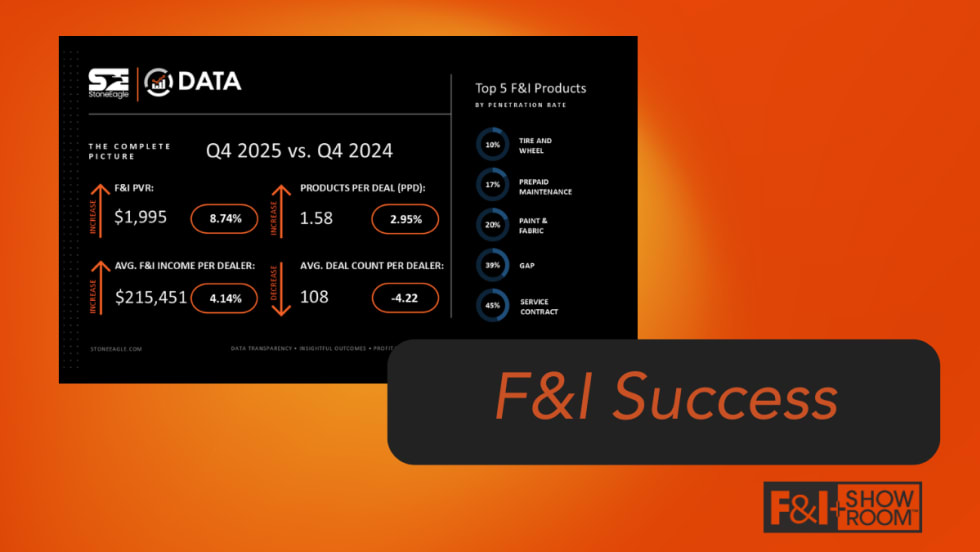
Report Finds Year-End F&I Strength

Deal volume ebbed and flowed throughout 2025, but product performance remained steady, according to automotive technology and data intelligence solutions provider StoneEagle.

Read More →
Industryby Lauren LawrenceFebruary 24, 2026

China Leads Battery Production

Between 2020 and 2025, gigafactory capacity grew six-fold and is set to grow another 118% by 2030, according Benchmark data.

Read More →
Industryby Hannah MitchellFebruary 24, 2026

Overall Consumer Confidence Up

Americans’ view of present business conditions, the labor market and family finances, though, are still in the dumps, and if they plan to buy cars, many target used units.

Read More →
Ad Loading...
Auto Financeby Lauren LawrenceFebruary 23, 2026

Auto Loan Forecast Bucks Market Trend

Auto loan originations rose over 6% year-over-year in the third quarter of 2025, but TransUnion predicts a slight decline in auto loan growth this year, making it an outlier in the company's overall lending forecast.

Read More →
F&Iby Hannah MitchellFebruary 23, 2026

Some Auto Brands Cheaper to Insure

A new top 10 list ranks the least expensive for average full insurance coverage on a clean driving record and high driver credit scores.

Read More →
Industryby StaffFebruary 20, 2026

Learn to Manage the Mayhem at Agent Summit

Rob Mancuso – president of Mancuso Automotive – will present a Keynote at the 2026 event.

Read More →
Ad Loading...
Industryby Lauren LawrenceFebruary 19, 2026

Affordability Leads Top-Rated List

Edmunds’ editorial team tested 300-plus vehicles to help determine the Top Rated Awards for 2026, and one brand stood out with multiple rankings, including Best of the Best.

Read More →
Salesby Hannah MitchellFebruary 19, 2026

Auto Sales Still Sluggish

February forecast has new-vehicle deliveries still off from last year at this time amid high prices and vanished EV incentives. But J.D. Power sees business picking up from here as automakers target growth.

Read More →
Industryby Hannah MitchellFebruary 18, 2026

EVs Bring Most Satisfaction to Date

Study finds that adopters are true believers and that their satisfaction with the vehicles is growing, including for public charger experience, despite pullback of federal incentives.

Read More →
Ad Loading...
Industryby Lauren LawrenceFebruary 17, 2026

Auto Manufacturing Drives Economic Growth

The sector generates over $64 billion in annual economic impact in South Carolina, making it the largest and fastest-growing manufacturing subsector in the state.

Read More →